1. Introduction
In recent years, many brands have begun to realize one important truth. Strong brands are not built solely through repeated messaging, but through experiences that audiences genuinely feel. Amid the flood of digital content, paid advertising, and social media campaigns, consumer attention has become increasingly difficult to capture and even easier to lose.
This reality forces brands to rethink how they build long-term relationships with their audiences. The focus is no longer simply on awareness or reach, but on meaning, relevance, and emotional engagement. This is where experiential marketing events take on a strategic role.
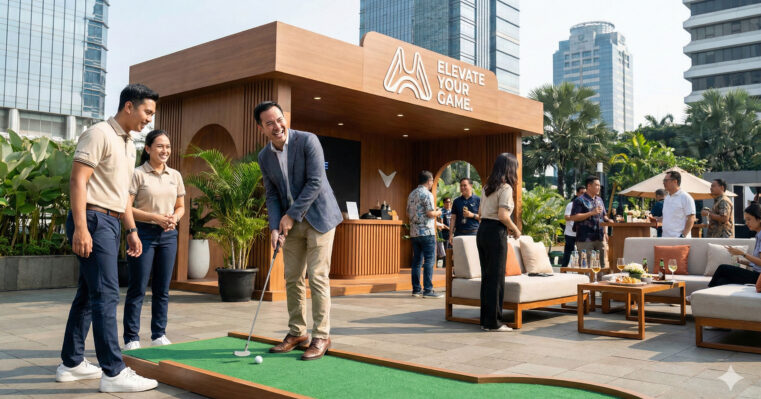
Experiential marketing events are not merely activations or promotional activities. They are an extension of brand identity. They are spaces where brands do not just speak, but show up, interact, and build real experiences together with their audiences.
This article explores why experiential marketing events are no longer just supporting elements, but have become a key pillar in long-term brand strategy.
2. The Shifting Role of Events in Brand Strategy
In the past, events were often positioned as tactical activities. They existed as campaign complements, milestone celebrations, or tools to gather audiences physically. The focus tended to be on smooth execution, attendance numbers, and attractive visuals.
However, changes in consumer behavior and business dynamics have shifted this role. Events are no longer sufficient simply because they run well. They must be strategically relevant.
Brands today face audiences that are more critical, more aware, and more selective. People no longer attend events just for entertainment or gimmicks. They arrive with expectations. Expectations to experience brand value directly.
As a result, events without a strategic foundation are quickly forgotten. In contrast, events designed as part of a brand strategy are capable of creating lasting impact.
3. What Is an Experiential Marketing Event
An experiential marketing event is an experience-based marketing approach where brands create direct interactions that allow audiences to feel the brand’s value, personality, and promise in tangible ways.
It is not merely about displaying logos or slogans, but about delivering experiences that align with brand identity. Audiences are not passive spectators, but active participants.
Key characteristics of experiential marketing events include:
Two-way interaction between brand and audience
Emotional engagement rather than purely rational appeal
Relevant and personalized experiences
Living and contextual brand narratives
Within a long-term strategy, experiential marketing is not about one large event, but about a series of experiences that consistently shape brand perception over time.
4. Why Brands Can No Longer Rely on One-Way Communication
One-way communication models are steadily losing effectiveness. Audiences are no longer passive recipients of brand messages. They choose, filter, and often ignore communication that feels irrelevant.
Ads can be skipped. Content can be bypassed. Promotional messages can be blocked. Experiences, however, are difficult to ignore.
Experiential marketing events give brands space to communicate through experience rather than messaging alone. Brands do not force audiences to listen. They invite them to feel.
In this context, experiential events become a far more powerful communication medium because they:
Engage the senses and emotions
Create longer-lasting memories
Open space for dialogue rather than monologue
Brands that continue to rely on one-way communication risk losing relevance in the eyes of modern audiences.
5. Experiential Marketing as a Shaper of Brand Perception
Brand perception is not shaped by what a brand says about itself, but by what audiences experience firsthand.
Experiential marketing events allow brands to:
Demonstrate values rather than merely claim them
Show brand culture and ways of working
Build trust through real experiences
For example, a brand that claims to be innovative must be able to deliver innovative event experiences. A brand that positions itself as human-centric must create interactions that feel personal and empathetic.
Any mismatch between brand claims and event experience is immediately felt by audiences and can damage brand credibility.
6. Building Emotional Connections That Other Media Cannot Replace
Purchase decisions and brand loyalty are often driven by emotion. Experiential marketing events excel at creating emotional connections because they deliver moments that are directly felt.
Through physical and social experiences, audiences:
Feel involved rather than targeted
Feel valued rather than treated as numbers
Feel connected rather than merely exposed
The emotions created during an event can remain far longer than advertising messages. This is why experiential marketing has significant long-term impact on brand affinity.
7. Experiential Events and Long-Term Brand Consistency
One of the biggest challenges for brands is maintaining consistency across multiple touchpoints. Events are often critical moments because they involve many elements at once, from visuals and communication to interaction and atmosphere.
Strategic experiential marketing events are designed with consideration for:
Consistent brand voice
Brand values reflected in every detail
Experiences aligned with brand positioning
When events are delivered consistently and sustainably, they become part of the brand system, not just seasonal activities.
8. The Role of Experiential Marketing in the Customer Journey
Experiential marketing events do not stand alone. They play roles across different stages of the customer journey.
At the awareness stage, events introduce the brand emotionally.
At the consideration stage, events strengthen understanding and trust.
At the loyalty stage, events build relationships and communities.
With proper design, experiential events connect these phases into a complete and continuous journey.
9. From Tactical Campaigns to Strategic Brand Platforms
Many brands still view experiential events as short-term campaigns. In reality, their true strength lies in their ability to become long-term strategic platforms.
Events can evolve into:
Brand-owned experiences
Community platforms
Signature brand moments audiences look forward to
When events are designed as platforms rather than campaigns, brands gain strategic assets that can be developed and maximized over time.
10. Common Mistakes Brands Make in Experiential Events
Some frequently observed mistakes include:
Focusing too much on visuals without a brand narrative
Following trends without strategic relevance
Measuring success solely by attendance numbers
Failing to connect events to business objectives
These mistakes strip experiential events of their strategic potential and reduce them to costly activities with limited long-term impact.
11. How to Measure the Long-Term Impact of Experiential Marketing
Measuring experiential marketing is indeed more complex than measuring digital advertising. However, that does not mean it cannot be measured.
Relevant indicators include:
Changes in brand perception
Levels of engagement and advocacy
Quality of audience relationships
Consistency of participation in follow-up events
This approach helps brands view experiential marketing as a strategic investment rather than merely an event expense.
12. The Role of Event Partners in Experiential Brand Strategy
Delivering strategic experiential marketing events requires more than execution capability. It demands deep understanding of brand, business, and audience.
The right event partner acts as:
A strategic thinker rather than just an executor
A translator of brand strategy into real experiences
A long-term partner in developing event platforms
This collaboration is essential to ensure experiential marketing truly supports long-term brand strategy.
13. Perspective Study: Brands That Win Through Experience
Brands that successfully build strong loyalty almost always have powerful experiential approaches. They do not merely exist in media, but in the lives of their audiences.
Consistent, relevant, and meaningful experiences make these brands:
Easier to remember
More trusted
More frequently recommended
This proves that experiential marketing is not a temporary trend, but a strategic necessity.
14. Positioning Experiential Marketing Events as Strategic Investments
When experiential marketing events are positioned as investments, brands tend to:
Plan more seriously
Execute more selectively
Develop more consistently
This approach ensures that every event contributes to long-term objectives rather than simply filling an activity calendar.
15. Conclusion
Experiential marketing events have evolved from supporting activities into essential elements of long-term brand strategy. Amid shifting audience behavior and an increasingly complex communication landscape, real experiences have become a differentiator that cannot be replaced by one-way messaging.
Brands that design experiential events strategically are able to build deeper relationships, strengthen perception, and create sustainable brand value. Relevant and consistent experiences do more than leave momentary impressions. They form lasting positive associations.
Without clear strategy, events easily become annual routines. But when designed with strong business objectives and brand direction, events transform into strategic assets that actively support brand growth and positioning.
16. Call to Action
At Alcor Prime, we believe experiential marketing events are not merely occasions, but strategic platforms for building long-term brands.
We work with brands and organizations that aim to deliver meaningful, relevant experiences aligned with business objectives. Our approach integrates brand strategy insight, audience understanding, and seamless execution.
If your brand is ready to move beyond events as activities and begin building experiences that truly make an impact, it is time to start the conversation with Alcor Prime.
Let us transform your events into strategic pillars for future brand growth.