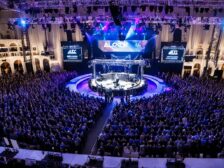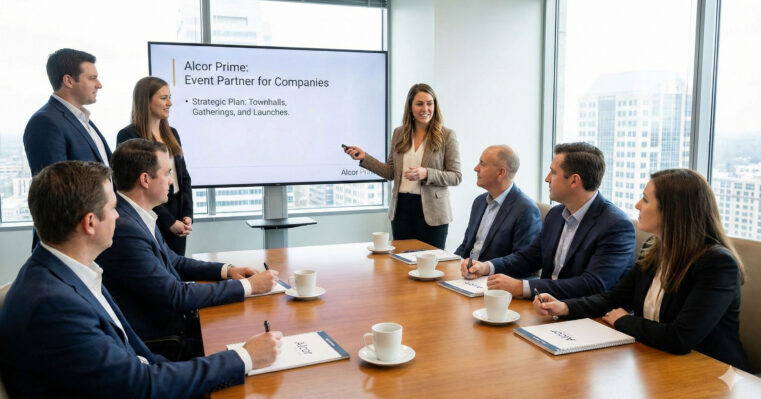
In today’s fast-moving business environment, companies are expected to operate with clear communication, a strong organizational culture, and precise execution. This is where corporate events play a role far beyond an annual agenda. Townhalls, gatherings, and launches have become essential components of corporate communication strategy, culture building, and measurable brand activation.
However, many companies face the same challenges. Internal teams are already overloaded with operational priorities. Stakeholders expect events that are professional, on time, and aligned with brand standards. The risks of miscommunication, last-minute changes, and complex vendor coordination often make preparation exhausting.
That is why more companies choose to work with an event partner for companies that can support them from planning and concept development through on-site execution. In this context, Alcor Prime is positioned as a strategic event solution partner that understands the needs of corporate communication, HR, and brand teams through an end-to-end approach that is structured, focused, and premium.
This article explains how companies can plan townhalls, gatherings, and launches strategically, what criteria to use when selecting the right event partner, and how Alcor Prime can help deliver events that are impactful and measurable.
1. Why Companies Need a Professional Event Partner
Great corporate events do not happen by chance. They come from solid planning, disciplined cross-team communication, and detail-driven execution. When an event involves senior leadership, hundreds or thousands of attendees, or carries the company’s name in front of external stakeholders, execution quality becomes non-negotiable.
A professional event partner helps to:
- Develop concepts that align with business goals
- Maintain brand consistency and communication tone
- Manage timelines, vendors, production, and operational risks
- Provide end-to-end solutions so internal teams are not overwhelmed
- Turn events into impactful experiences rather than mere formalities
For Corporate Communication, events are strategic communication channels that shape employee and stakeholder perception. For HR, events are tools to build engagement and culture. For brand teams, launches are moments that define first impressions. With that level of complexity, choosing the right partner saves time, reduces risk, and elevates outcomes.
2. Three Corporate Event Types That Most Often Require a Partner
Townhalls
A townhall is a two-way communication moment between leadership and employees. It is not just a performance update, but an opportunity to build alignment, trust, and a sense of belonging.
Townhalls typically involve:
- Sensitive, high-priority messaging
- An agenda structure that must be efficient
- Managing Q&A moments effectively
- Stage, visual, and audio production that must be clear
- Large-scale participant coordination
Corporate Gatherings
Gatherings are no longer enough when they rely purely on entertainment. Modern companies want gatherings that:
- Reinforce company values and culture
- Recognize employees in meaningful ways
- Strengthen connections across teams and departments
- Deliver a relevant, premium experience
A well-designed gathering can become a catalyst for culture and organizational energy.
Launches
A launch may include a product, a program, a new initiative, or a corporate identity rollout. Launches are typically high-stakes because expectations are high and visibility is significant.
Launches require:
- A strong storyline
- Stakeholder and media management
- Production that reflects brand standards
- A post-event documentation and content distribution plan
3. Common Challenges in Corporate Events and How to Anticipate Them
Below are the most common issues in corporate event preparation, along with strategic ways to anticipate them.
Unclear event objectives
Without specific objectives, events often become busy activities with minimal impact.
Solution:
Define clear objectives early, such as strategic alignment, engagement improvement, or launching a new message. From these objectives, the event partner can translate them into a program structure, format, and content.
Tight timelines and frequent changes
Corporate events often face last-minute agenda shifts due to leadership decisions or changing business conditions.
Solution:
Work with a partner who has a structured workflow, including production timelines, approval flows, and contingency plans. This approach enables changes without sacrificing quality.
Too many vendors without integration
Managing separate vendors for audio, visual, stage, venue, catering, talent, and documentation can drain internal resources.
Solution:
Choose an event partner with integrated solutions so coordination becomes simpler, risk is reduced, and quality remains consistent.
Events feel too formal, rigid, and low engagement
This most often happens in townhalls and internal events. People attend, but they are not engaged.
Solution:
Design a program with the right pacing, include interactive elements, strengthen the narrative arc, and craft an experience that makes participants feel involved.
4. Criteria for Choosing the Right Event Partner for Companies
Choosing an event partner should not be based only on visual portfolios. More important is the partner’s ability to manage strategy, process, and risk.
Key criteria include:
- Corporate context understanding
The partner must understand formality standards, internal communication sensitivity, and leadership expectations. - Strategic and conceptual capability
Not execution only. The ideal partner helps define storyline, format, and experience aligned to objectives. - Clear workflow system
From kickoff and timeline to approvals and detailed production planning. - Consistent production quality
Clear audio, polished visuals, premium staging, and a carefully designed attendee experience. - Strong risk management
Including backups for technical issues, agenda changes, and venue constraints. - An ecosystem of services
The more integrated the services, the more efficient the process. - Ability to measure outcomes
A strong partner can suggest KPIs and measurement methods.
5. How to Design an Effective, Premium Townhall
An effective townhall is not about long duration, but about clarity and involvement.
Start with the core narrative
Define one key message you want participants to retain. This becomes the guiding thread.
Examples of narrative focus:
- Company direction and next-quarter priorities
- Transformation initiatives and cultural shifts
- Achievements and challenges that should be understood collectively
Build a concise and dynamic agenda
An overly long townhall reduces attention. An experienced event partner helps structure pacing, transitions, and momentum.
Elements that often work well:
- Opening that sets context and objectives
- Brief updates based on insight
- Interactive segment such as polling or curated Q&A
- Closing that reinforces the key message and an internal call to action
Prioritize production quality
If the audio is unclear, the core message is lost. If visuals are not polished, professional perception drops. Corporate townhalls require production that is comfortable to watch and easy to hear.
Manage Q&A with elegance
Q&A is critical. It needs a structured format, including question collection, curation, and time allocation.
The right event partner helps keep Q&A open yet guided and safe from a communication standpoint.
6. How to Design a Relevant Corporate Gathering That Builds Culture
A gathering is not just a celebration. It is a culture moment.
Define the cultural objective
For example:
- Strengthen cross-team collaboration
- Recognize contributions meaningfully
- Create renewed energy around annual goals
With a clear cultural objective, the concept becomes relevant rather than generic.
Build an experience aligned with company identity
Premium corporate gatherings typically emphasize:
- Curated experiences with strong flow
- A program that is not excessive but feels refined
- Attention to visual details, hospitality, and attendee comfort
Ensure the program is not entertainment only
Elements that raise the value of a gathering:
- Meaningful recognition segments
- Storytelling about the company journey
- Activities that encourage interaction
- Experience corners aligned with company values
Treat documentation as a post-event asset
A strong gathering generates content for employer branding and internal communication. Plan documentation early, not at the last minute.
7. How to Design a Compelling Product or Corporate Launch
An effective launch needs a storyline, not just a stage.
Define positioning and the key message
A launch should answer:
- What is being launched
- Why it matters
- What impact it brings to the audience and stakeholders
Use a format that supports clarity
Launch formats vary:
- Strong keynote presentation
- Curated demos
- Experience booths
- Media or stakeholder engagement sessions
The key is enabling the audience to grasp the message quickly.
Design the peak moment
Every launch needs a climax, such as:
- A reveal moment
- A strong leadership statement
- Visual storytelling that emphasizes the brand’s value
A good event partner helps manage pacing and production so the moment feels premium and memorable.
Plan post-event distribution
A strong launch includes post-event planning:
- Highlight video
- Press release
- Social media content
- Internal materials for sales or customer-facing teams
8. Measuring Impact and Defining KPIs for Corporate Events
In 2026, companies increasingly demand measurable outcomes. KPIs do not have to be massive numbers, but they must be relevant to the objectives.
Townhall KPI examples:
- Participation rate
- Q&A engagement
- Internal feedback
- Message understanding through quick surveys
Gathering KPI examples:
- Attendee experience feedback
- Activity participation
- Internal sentiment improvement
- Employer branding content produced
Launch KPI examples:
- Stakeholder attendance
- Engagement on post-event content
- Leads or interest from targeted audiences
- Quality of internal and external coverage
A professional event partner helps define realistic KPIs, measurement methods, and reporting formats that are easy to present to management.
9. The Ideal Workflow When Working with an Event Partner
To keep collaboration effective, the following workflow is typically ideal:
- Kickoff and objective alignment
Agree on goals, target audiences, and expectations. - Concept strategy and storyline
Develop theme, format, program flow, and key messages. - Production planning and timeline
Set timelines, deliverables, and approval flows. - Vendor coordination and technical planning
Audio, lighting, stage, visuals, venue, catering, talent, documentation. - Rehearsal and final checks
Ensure readiness and a plan for change. - Execution on event day
Strong on-ground management, fast communication, and quality control. - Post-event reporting and asset delivery
Deliver documentation, KPI reporting, and improvement recommendations.
10. Why Choose Alcor Prime for Townhalls, Gatherings, and Launches
Alcor Prime is positioned as an end-to-end event solution partner that supports companies from strategy through execution. For Corporate Communication and HR, this means working with a partner that does not simply run events, but ensures events become solutions.
Alcor Prime focuses on:
- A strategic approach aligned with company objectives
- Premium production standards
- A structured process that reduces internal workload
- An ecosystem of services that supports corporate event needs
With this approach, townhalls become clearer and more engaging, gatherings become more meaningful, and launches become more compelling and measurable.
11. Short FAQ
Do companies only need an event partner for large events?
No. An event partner also helps mid-scale events become more structured, time-efficient, and lower risk.
What is the main benefit of an end-to-end event solution compared to managing multiple vendors?
Simpler coordination, lower risk, consistent quality, and internal teams can focus on substance and stakeholder alignment.
What differentiates Alcor Prime from typical event vendors?
Alcor Prime acts as a solution partner providing integrated strategy, production, and execution with premium standards and professional structure.
12. Contact Us
If you are looking for an event partner for companies that can help plan townhalls, corporate gatherings, and launches strategically and professionally, Alcor Prime is ready to support you.
The next step is simple:
- Discuss your event objectives
- Determine the most relevant format
- Build the concept, timeline, and production needs in a measurable way
Reach out to Alcor Prime through the official website or visit the Event Solution Hub landing page to start a consultation and design the right event solution for your company.