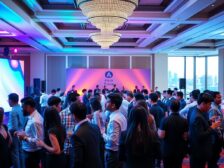
In many organizations, corporate events have become a fixed part of the annual calendar. Town halls, internal gatherings, product launches, leadership forums, stakeholder meetings, and appreciation events are scheduled months in advance and executed with precision. Venues are booked early, vendors are retained, agendas are refined, and logistics are handled efficiently. On the surface, everything appears to be running smoothly.
However, beneath this operational consistency lies a more critical question that senior leaders should be asking: are these events still creating strategic progress for the business, or are they simply being repeated out of habit?
Repetition is not inherently problematic. In fact, consistency can be a strength when it reinforces clarity, trust, and alignment. The issue arises when repetition is no longer guided by strategic intent. When corporate events continue to run year after year without evolving in response to business priorities, organizational changes, or market dynamics, their impact gradually diminishes.
This article explores eight key signs that indicate a corporate event program may be repeating without strategic progress. These signs are not always obvious. In many cases, events still feel successful. Attendance is stable, execution is polished, and stakeholders appear satisfied. Yet over time, the business value erodes, and events shift from being strategic assets to operational routines.
For executives, this is not merely an event management concern. It is a leadership issue, a governance issue, and ultimately a business performance issue.
1. The Event Exists Because It Always Has
One of the most common indicators of stagnation is when an event continues primarily because it has always existed. When asked why the organization still runs a particular event, the answer is often historical rather than strategic.
Common justifications include statements such as:
- This is our annual tradition.
- Employees expect it.
- We have always done it this way.
- It would be risky to remove it.
While tradition has value, it should never replace purpose. An event that exists solely due to legacy is no longer serving the organization intentionally. Over time, its relevance to current business objectives weakens, even if the event itself remains popular.
Strategic events should be anchored to clear and current organizational needs. These may include leadership alignment, cultural transformation, business integration, change communication, stakeholder confidence, or brand positioning. When the original rationale for an event no longer aligns with today’s priorities, repetition becomes a liability rather than an asset.
Senior leaders should periodically challenge every recurring event with a simple but powerful question: if this event did not already exist, would we create it today?
If the answer is uncertain, the event requires rethinking.
2. Objectives Remain Unchanged Despite Business Evolution
Businesses evolve continuously. Market conditions shift, organizational structures change, leadership priorities adapt, and stakeholder expectations rise. When corporate events fail to reflect these changes, it is a clear sign of strategic misalignment.
Many organizations reuse the same event objectives year after year. The language may sound familiar and safe, focusing on general goals such as alignment, engagement, or awareness. While these objectives are not incorrect, they often lack specificity and relevance to the organization’s current stage.
For example, an organization undergoing transformation may still run events designed for stability rather than change. A company entering new markets may continue hosting events that focus inward instead of outward. A business facing talent retention challenges may repeat events that celebrate performance without addressing employee sentiment or leadership trust.
Strategic progress requires that event objectives evolve alongside the business. Objectives should be reviewed annually, if not more frequently, and adjusted to reflect real organizational needs. When objectives remain static while the business moves forward, events slowly lose their ability to influence outcomes.
In such cases, repetition becomes a comfort zone rather than a strategic tool.
3. Leadership Participation Feels Symbolic Rather Than Intentional
Leadership presence is often seen as a critical component of corporate events. Executives deliver keynote speeches, participate in panel discussions, and appear on stage as representatives of the organization’s vision. However, when leadership involvement becomes repetitive and predictable, its impact weakens.
A clear sign of stagnation is when leadership contributions feel ceremonial rather than purposeful. Speeches follow similar structures each year. Messages remain broad and non-committal. Engagement with the audience is limited to formal appearances rather than meaningful interaction.
Employees and stakeholders are highly perceptive. They can distinguish between leaders who are present with intent and those who are present out of obligation. When leadership messaging does not evolve to address current realities, it loses credibility.
Strategic events should leverage leadership presence deliberately. This includes clarifying what role leaders are meant to play, what decisions or messages need to be reinforced, and how leadership interaction supports broader organizational goals.
If leadership presence is no longer driving clarity, confidence, or alignment, repetition has replaced strategy.
4. The Event Format Has Not Changed Despite Audience Maturity
Audiences evolve just as businesses do. Employees gain experience, stakeholders become more informed, and expectations increase over time. When event formats remain unchanged despite this audience maturity, engagement naturally declines.
Many organizations rely on formats that once worked well but no longer resonate. Long presentations, one-way communication, and rigid agendas may have been effective in the past. However, over time, they can feel disconnected from the audience’s current needs and preferences.
A strategic event recognizes that audience maturity requires format evolution. This does not mean following trends for the sake of novelty. It means understanding how the audience consumes information, makes decisions, and engages emotionally at different stages of their relationship with the organization.
When event formats are repeated without reassessment, participation becomes passive. Attendance may remain high, but attention, retention, and impact decline.
This is not an execution issue. It is a strategic oversight.
5. Success Is Measured by Execution, Not Impact
Another strong indicator of repetition without progress is how success is defined. In many organizations, event success is measured almost entirely by operational metrics.
These often include:
- Attendance numbers
- Budget adherence
- Timeline accuracy
- Absence of major issues
While these metrics are important, they are insufficient. They measure how well the event was executed, not whether it achieved meaningful outcomes.
Strategic events should be evaluated based on their contribution to business objectives. This may include changes in understanding, shifts in behavior, improved alignment, stronger trust, or clearer decision-making. These outcomes are more complex to measure, but they are essential indicators of value.
When post-event discussions focus solely on logistics and satisfaction scores, it suggests that the event has become an operational deliverable rather than a strategic intervention.
Over time, this mindset reinforces repetition. Events are replicated because they are easy to manage, not because they are effective.
6. Internal Teams Are Operating on Autopilot
Repetition without strategy often manifests in the way internal teams approach event planning. When teams rely heavily on templates, standard timelines, and previous year materials without questioning their relevance, innovation stalls.
This is not a reflection of team capability. In many cases, teams are under pressure to deliver consistently with limited resources. However, without strategic guidance, they default to what is familiar and safe.
Signs of autopilot behavior include:
- Reusing the same agendas with minimal changes
- Briefing vendors with last year’s materials
- Avoiding strategic discussions to save time
- Prioritizing speed over alignment
Strategic events require teams to think beyond execution. They need clarity on why the event exists, what has changed since the last iteration, and how success should be defined differently.
Without this clarity, teams become excellent executors of outdated strategies.
7. The Event No Longer Reflects Organizational Reality
Corporate events often serve as a mirror of the organization. They communicate values, priorities, and culture, both explicitly and implicitly. When events are repeated without adaptation, they risk projecting an image that no longer matches reality.
This disconnect can be subtle. Messaging may emphasize stability while employees experience uncertainty. The tone may feel celebratory while stakeholders are concerned about performance. Leadership narratives may highlight growth while internal sentiment suggests fatigue.
When events fail to acknowledge current challenges, they lose authenticity. Audiences may still attend, but trust erodes quietly. Over time, events are perceived as disconnected from real organizational life.
Strategic progress requires honesty and relevance. Events should reflect where the organization truly is, not where it wishes to appear.
Repetition without adjustment undermines this credibility.
8. The Event Does Not Build Long-Term Value
Perhaps the most critical sign of stagnation is when an event does not contribute to long-term value creation. Strategic events should compound over time. Each iteration should build on previous outcomes, deepen relationships, and strengthen positioning.
When events are repeated without a long-term vision, they remain isolated moments rather than part of a broader journey. Learnings are not carried forward. Narratives do not evolve. Momentum is lost between editions.
This often results in a cycle where events feel impactful in the moment but leave little lasting effect. Resources are consumed annually without creating cumulative value.
From a leadership perspective, this represents a missed opportunity. Corporate events have the potential to become strategic platforms that support business growth, cultural alignment, and stakeholder trust over time.
Without intentional design, repetition prevents this potential from being realized.
Moving from Repetition to Strategic Progress
Recognizing these signs is the first step. The next step is reframing how corporate events are viewed within the organization.
Strategic events are not isolated activities. They are tools that support leadership, communication, and decision-making. They require the same level of strategic thinking as any other business initiative.
This shift begins with asking different questions:
- What strategic role does this event play today?
- What has changed since the last iteration?
- What outcome would make this event genuinely valuable?
- How does this event support long-term organizational goals?
Answering these questions requires collaboration between leadership, internal teams, and external partners who understand both business strategy and event execution.
A Strategic Approach to Corporate Events
Organizations that successfully transform repetitive events into strategic assets typically adopt a more holistic approach. They view events as part of a broader ecosystem rather than standalone deliverables.
This includes:
- Aligning events with leadership priorities
- Designing events around business outcomes
- Ensuring consistency with room for evolution
- Building narratives that develop over time
- Measuring success beyond operational metrics
Such an approach does not eliminate repetition. Instead, it gives repetition purpose. Events become recognizable yet dynamic, familiar yet relevant.
Conclusion
Repetition is not the enemy of impact. Lack of strategy is.
Corporate events that are repeated without reflection gradually lose their ability to influence behavior, reinforce trust, and support business objectives. They remain busy, visible, and well-executed, but strategically quiet.
For senior leaders, the challenge is not whether to continue hosting events, but how to ensure those events evolve alongside the organization they represent.
Strategic progress requires intentional design, honest evaluation, and a willingness to rethink what no longer serves the business.
Call to Action
At Alcor Prime, we work with organizations that view corporate events not as routine obligations, but as strategic platforms.
Our approach goes beyond execution. We partner with leadership teams to ensure each event aligns with business priorities, reflects organizational reality, and contributes to long-term value.
If your corporate events feel consistent but no longer impactful, it may be time for a strategic reset.
Connect with Alcor Prime to explore how your events can move from repetition to real strategic progress.